Why belize maya village community tourism belongs on a luxury itinerary
Belize is small on the map yet immense in layered culture. For couples used to polished suites in San Pedro or a sky lounge in Belize City, time in a Maya village adds a dimension no infinity pool can match. A single day spent in a community-run homestay can recalibrate what the word luxury means.
Across southern Belize and the Toledo District, Q’eqchi’ and Mopan Maya villagers are shaping tourism on their own terms, inviting guests into village life rather than staging a show. This is where the concept of community-led tourism becomes tangible, as host family kitchens, cacao orchards and riverside washing stones turn into the most memorable guided tour you will take. The result is a style of travel where comfort from your jungle lodge or reef resort coexists with authentic contact in Maya villages, and the contrast is precisely what makes the experience powerful.
Luxury travelers often ask why they should leave a five star suite for a night in a simple Maya village homestay. The answer lies in perspective, because community-based tourism in Belize lets you see how tourism revenue circulates through real households instead of stopping at the resort gate. When you return to your hotel in San Ignacio or to a private caye after a full day in the Toledo District, the sunset cocktail tastes different, because you now know the names of the women who wove your table runner and the farmer who grew your cacao.
The community tourism model in Indian Creek and San Antonio
In the Toledo District, Indian Creek has become a reference point for Maya village tourism managed on community terms. Here, the Living Maya Experience is owned and run by local families, and every tour is designed to protect village life first and tourism second. Couples join a guided visit that might start with grinding corn on a stone metate, then move into the forest to learn how traditional healers read the landscape.
Farther north, in San Antonio village near San Ignacio, a women’s cooperative anchors another strand of community tourism. The San Antonio Women’s Cooperative focuses on weaving and pottery, and their work has become a quiet counterpoint to the polished galleries in Belize City or the resort shops in San Pedro. When you sit with them for a half day workshop, you see how each textile carries stories of Maya villages, migration and resilience, and how the income from each sale returns directly to school fees and household repairs.
Both Indian Creek and San Antonio show how a Maya village can use tourism as a tool rather than a threat. Local leaders work with groups such as the Toledo Institute for Development and Environment and trusted tour Belize operators to cap group sizes at around eight to ten guests, schedule visits around planting seasons and ensure that host family obligations never overwhelm daily responsibilities. For travelers curious about how archaeology and living culture intersect, pairing these visits with a stay at a Cayo jungle lodge and a deep dive into how Maya archaeology reshapes the guest experience creates a coherent, culture rich itinerary.
From maya ruins to village life: weaving, food and digital storytelling
Most luxury itineraries in Belize already include marquee Maya ruins such as Caracol, Xunantunich or Lamanai. Those sites are extraordinary, yet without context they can feel like beautiful stone shells, impressive but strangely silent. Time in contemporary Maya communities fills that silence with voices, recipes and weaving patterns that link the temples to the present.
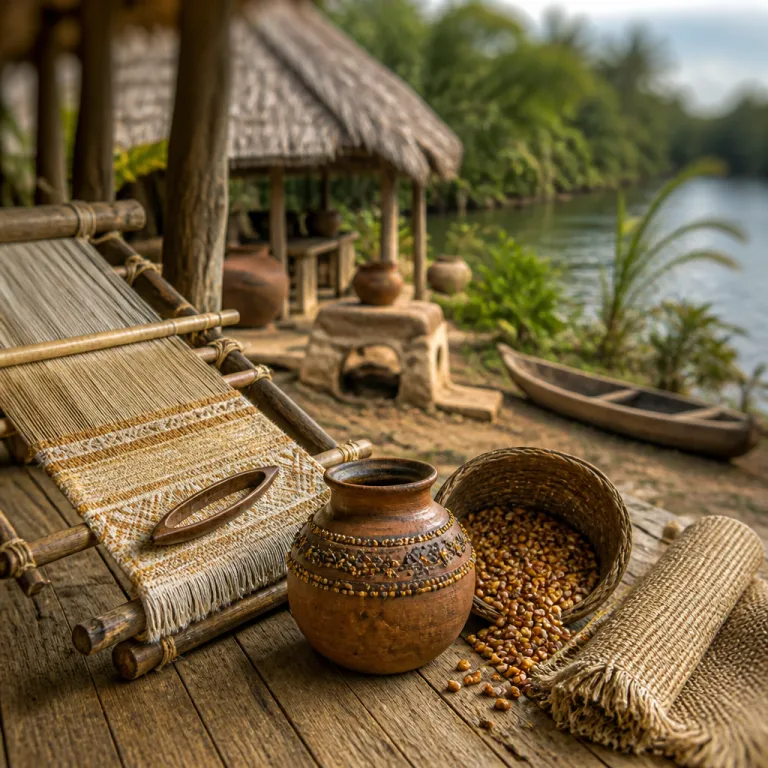
In San Antonio and other Maya villages across southern Belize, weaving cooperatives invite guests to sit beside them, not just browse a display table. You watch as a backstrap loom tightens around a woman’s waist, and the pattern emerging under her fingers echoes motifs you saw carved into a stela at a ruin earlier that week. When you buy a textile here, you are not purchasing a generic souvenir; you are entering a direct economic relationship where the price you pay supports local culture, and the cooperative’s ledger is as important as any resort’s revenue report.
Digital projects now deepen this bridge between ruins and villages. The Maya Mapping Collaborative, using tools such as the Altun Ha StoryMap, layers oral histories and community narratives over archaeological plans, so a guided tour of Maya ruins can be followed by a visit to a nearby Maya village where those stories are still lived. One coordinator explains that “maps become a way for communities to decide how tourism should enter their space, not the other way around.” Pair that with a cacao tasting or cashew wine stop highlighted in a guide to Belize’s artisan producers between dives, and you begin to see how food, mapping and storytelling converge into one seamless experience.
Caves, rivers and rituals: when adventure meets living culture
Belize’s caves and rivers already headline many luxury adventure itineraries, from the ATM Cave near San Ignacio to the cave tubing routes closer to Belize City. These landscapes are not just playgrounds for adrenaline; they are sacred spaces in Maya cosmology, and community tourism partnerships are gradually reclaiming that narrative. When you book a guided tour that is co designed with Maya villages, the briefing shifts from pure safety talk to a conversation about respect.
The ATM Cave, for example, is often sold as a must do adventure from San Ignacio or even from San Pedro via a long day trip. Yet when your guide is from a nearby Maya village, the cave becomes a three level story about geology, archaeology and contemporary belief, and you move more slowly through the chambers because you understand why certain formations are still considered alive. The same applies to cave tubing excursions in southern Belize, where Toledo ecotourism projects are working with an ecotourism association to limit group sizes, keep most tours under twelve people and ensure that local youth are trained as qualified guides.
On the surface, these are still thrilling experiences that fit neatly into a full day outing from a luxury lodge. Underneath, they are also case studies in how tourism revenue can support community training, river monitoring and cultural education programs in Maya villages. In some initiatives, at least half of the tour fee stays with village committees or guide associations, with the remainder covering transport and permits. When you return to your hotel spa for a treatment curated from local botanicals, perhaps after reading about Belize spa stays designed to recalibrate burned out executives, you carry the cave’s cool darkness and the guide’s stories with you, and the massage feels less like escape and more like integration.
Designing ethical, romantic itineraries that link cayes, cities and maya villages
For couples, the romance of Maya village homestays lies in shared learning rather than staged sunsets. You might start with two nights in Belize City to adjust, then fly to San Pedro for reef time before heading inland to San Ignacio and finally south to Punta Gorda in the Toledo District. Each move shifts you from city to caye to village, and the contrast keeps the journey alive.
From San Pedro, a short flight or boat and road combination brings you to the mainland, where a driver can take you from Belize City to San Ignacio in under two hours. Here, you can pair a day at nearby Maya ruins with an afternoon in a Maya village, perhaps joining a cooking class where a host family teaches you to prepare caldo and hand formed tortillas while you practice a few words of Spanish and a few phrases in a local Maya language. Activities might include cooking traditional meals, learning handicrafts and participating in daily village life, with your hosts setting the pace.
Farther south in the Toledo District, Punta Gorda acts as a relaxed base for Toledo ecotourism, with Maya villages scattered along the road and river network. A full day guided tour might include a morning in San Antonio or another village, lunch with a host family, and an afternoon river paddle or farm visit, while multi day stays can weave in homestays that remain comfortable yet intentionally simple. These visits provide economic support and help preserve cultural traditions, and they offer educational and engaging experiences for all ages when they are planned in partnership with the communities themselves.
How to choose genuine community partnerships over performative culture
Not every tour that mentions a Maya village or community visit is created equal. Luxury travelers booking through high end agencies or directly on platforms like mybelizestay.com should ask precise questions about how community tourism is structured behind the scenes. The goal is to ensure that the experience feels authentic for you and genuinely beneficial for the community.
Start by asking who owns the experience and how payments are handled. In the strongest models, the village council, a women’s cooperative or a local ecotourism association manages bookings and distributes income, while outside tour Belize operators handle transport and marketing. Look for clear caps on group size, transparent pricing and itineraries that respect village life rhythms, such as avoiding key planting or harvest days unless the visit is explicitly framed as participatory work.
Ethical operators will also brief you on etiquette before entering Maya villages, from dress codes to photography consent and basic phrases in Spanish or a Maya language. They will position you as a temporary guest in a functioning community, not as a spectator at a show, and they will be honest if a homestay is not appropriate for your comfort level, suggesting a day visit instead. You should expect clear rules on when and how to take photos, and explicit consent before photographing children or ceremonies. When those conditions are met, the lessons you carry back to your suite in San Ignacio, Belize City or San Pedro are subtle yet lasting, and they shape how you evaluate every resort stay that follows.
FAQ about Maya village homestays and community tours in Belize
What can I realistically expect from a Maya village homestay in Belize ?
You can expect simple but clean accommodation with a host family, shared meals based on local ingredients and participation in daily village life. Activities often include cooking, learning handicrafts and joining farm or forest walks, with comfort levels discussed in advance. Most luxury travelers pair one or two nights in a Maya village with stays at higher end lodges before and after.
How do Maya village homestays benefit the local community in Belize ?
Homestays generate direct income for host families and cooperatives, which can be used for school fees, house improvements and community projects. They also create incentives to maintain traditional skills such as weaving, farming and language use, because these become valued parts of the tourism offer. When managed through a village council or ecotourism association, the benefits are shared more widely across the community.
Are Maya village experiences suitable for couples who usually stay in luxury hotels ?
Yes, provided you approach them as intentional contrasts rather than as extensions of resort comfort. Couples often find that a one or two night homestay, or even a full day visit with a host family, adds emotional depth and shared memories that outlast many spa treatments. Clear communication about facilities, privacy and dietary needs is essential, and a good operator will match you with the right village and format.
How can I tell if a community tour is ethical and not just a staged show ?
Look for tours where the community sets the schedule, group size and activities, and where payments go through a local organization rather than only through an outside company. Ethical operators will explain how income is distributed, brief you on etiquette and limit intrusive photography or unannounced visits. Reviews that mention meaningful interaction, not just performances, are another strong indicator.
Is it possible to combine reef time with Maya village visits in one Belize trip ?
It is very feasible to combine cayes such as San Pedro with inland stays near San Ignacio and southern Belize. Many travelers spend a few nights on the reef, then transfer via Belize City to the Cayo or Toledo District for Maya ruins, caves and village life before returning to the coast. Working with a specialist in Maya village community tourism helps you balance travel times, comfort levels and the right mix of adventure and cultural immersion.